REVIEW · GDANSK
Gdansk: 2H City Sightseeing Tour LIVE GUIDED by Buggy/Golf cart
Book on Viator →Operated by Top City Tour Gdansk · Bookable on Viator
Gdańsk shrinks nicely in two hours. This electric golf cart tour zips you through the city’s biggest icons—starting at Neptune’s Fountain—without the constant walking and re-navigating. I love the way it blends classic Old Town sights with the heavier Solidarity-and-shipyard story in one smooth loop.
Two things I really like: the live guide (English offered) tells the why behind the buildings, and the included drink helps you stay comfortable while you hop between stops. On past tours, guides like Michael and Noris are praised for humor, clear explanations, and answering questions.
One possible drawback: this is a fast-hit highlights tour. If you want long museum time or deep interior lingering at every church, you’ll need to plan follow-up visits after the cart drops you back near the Old Town.
In This Review
- Key highlights at a glance
- Price and time: what $51.97 buys you in Gdańsk
- Electric buggy logistics: where you ride and how you meet
- The Old Town loop: from Neptune’s Fountain to the gates you’ll recognize
- Churches, courts, and the practical art of short stopovers
- The Solidarity stretch: shipyard memory without feeling like homework
- WWII and the post-office chapter: learning by seeing specific places
- Guide quality: what makes the tour feel fun instead of just factual
- Best for who: when this cart tour fits your style
- Should you book the Buggy/Golf Cart Highlights Tour in Gdańsk?
- FAQ
- How long is the Gdańsk buggy tour?
- What is the meeting point for the tour?
- Do you offer pickup?
- Is there an included drink?
- Is the tour guided in English?
- What places are included for the amber visit?
- Is pickup offered from ports?
- Can I cancel for free?
- What’s the group size?
Key highlights at a glance
- Electric golf buggy efficiency: see far more than you could on foot in the same time.
- A drink included: bottled water plus a choice of water, coffee, or beer.
- Old Town plus Solidarity in one route: from Neptune and the gates to the shipyard area.
- Short, well-timed stops: quick photo windows plus a few longer moments.
- Licensed live guidance in English: guides include Michael and Noris (among others).
- Small max group size: up to 30 travelers per tour for easier movement.
Price and time: what $51.97 buys you in Gdańsk
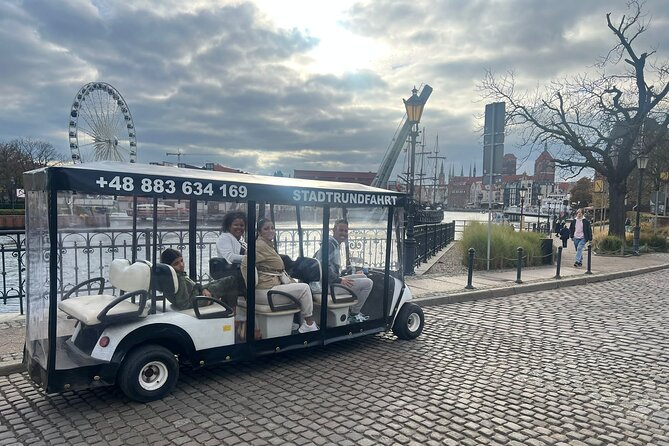
At $51.97 per person for about 2 to 2 hours 15 minutes, the value here is not ticketing—it’s time. In a couple of hours, you’re basically getting a guided route through the city’s most photographed Old Town points and its most important modern-history sites.
You also get two practical perks that matter more than they sound. First, your bottled water plus the included drink (water, coffee, or beer) keeps the tour from feeling like a constant dash. Second, the golf cart setup saves your legs for the parts you’ll want to revisit later—like St. Mary’s Church area and the long stretches along the Motława River.
Just note the tradeoff: this is a highlights circuit. Most stops are brief, so the tour works best as an orientation. Think of it as your map for where to spend real time on your own afterward.
Electric buggy logistics: where you ride and how you meet
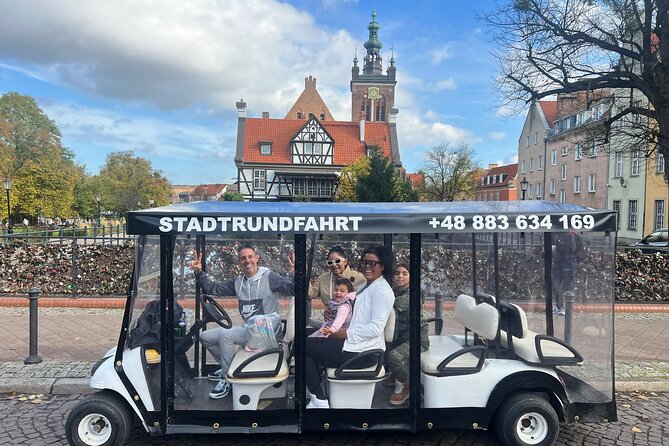
This tour starts and ends near Neptune’s Fountain on Długi Targ, and pickup is offered within a 2 km radius from that point. That’s great because it keeps you in the heart of the action rather than dealing with awkward bus transfers.
There are two logistics tips that can save you stress:
- Be ready 10 minutes before the scheduled start time at your pickup spot.
- If you’re coming from a port area, keep expectations in check. Pickup is not offered at ports.
Also, keep in mind parts of Gdańsk have restricted-access streets. If your address lands in a restricted zone, your guide will contact you to choose a nearby pickup point. In practice, that means you’ll still ride, but you might not park directly at your exact door.
The Old Town loop: from Neptune’s Fountain to the gates you’ll recognize
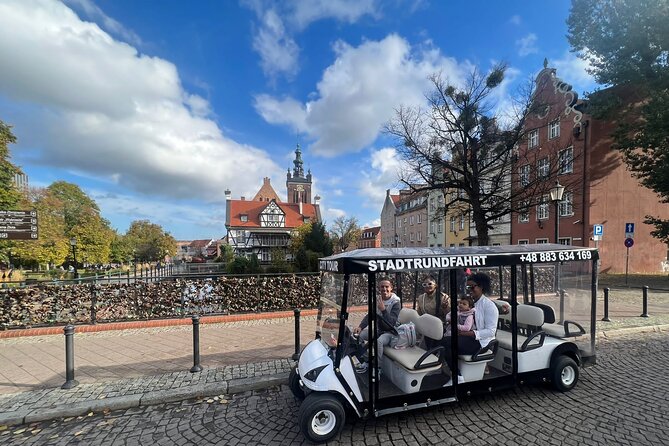
The opening minutes matter, and this tour uses them well. You begin at Neptune’s Fountain (Fontanna Neptuna)—the classic symbol people queue to photograph. Even if you’ve seen pictures online, seeing it in person is a fast way to ground your bearings. From there, you transition into the historical-center rhythm where the buildings and streets start to make sense.
Next are a run of Old Town stops that connect one landmark to the next:
- Main Town Hall / Museum of Gdańsk: a 14th-century building reconstructed after WWII.
- Arthur’s Court (Muzeum Gdańska / Stock exchange era): merchants first, then stock exchange, now part of the museum network.
- Długi Targ (Long Market Square): the main square in the historic center—this is where the Old Town feels like a single, walkable stage.
- Green Gate (Brama Zielona): a Renaissance gate tied to royal residence history (1564–1568), and now part of the museum complex.
- Shakespeare Theatre (folding roof): a fun fact stop that helps you remember Gdańsk isn’t only medieval stone.
The big win here is pacing. By the time you reach the gates, you’re not seeing random photo stops. You’re building a mental map of where the city’s power and trade flowed.
Churches, courts, and the practical art of short stopovers
After the main square, the route leans into buildings that are visually striking even when you only see them from the street.
You’ll pass:
- Katownia (Old Prison Tower): the old prison tower area with its neck and torture chamber history. It’s dark in theme, but it gives weight to the city’s older rules and punishments.
- Langgasser Tor / Golden Gate: where royal suites used to enter Długa Street.
- Highland Gate: now tied to the gatehouse complex and functions today as a tourist information point.
Then you hit architectural standouts:
- Great Armoury (Wielka Zbrojownia): Dutch Mannerism style, impressive façade, and today connected to the city’s art academy.
- Millennium Tree (Trzewko Tysiąclecia): a modern stainless-steel monument marking the city’s 1000th anniversary.
- Jan III Sobieski Monument: the equestrian statue, originally built in Lviv (1898) and moved to Gdańsk in 1965.
For church lovers, you get a string of them—mostly quick looks, but the right ones:
- St. Joseph’s Church (15th century, rebuilt after WWII)
- St. Elisabeth’s Church (built on earlier hospital/leprosarium ground; reconstructed after serious WWII damage)
- Old Town Hall (Ratusz Starego Miasta) again, if you missed it earlier in the flow
- St. Catherine’s Church (oldest in Gdańsk; shifted Protestant to Catholic after 1945)
- St. Bridget’s Church with the Amber Altar: this is one of the longer moments, and admission is included.
That Amber Altar detail is memorable: it’s described as twice the size of the legendary Amber Room and more than three times as high. If you like art objects you can actually understand just by looking, this stop is the one to linger at. It’s also the moment where the tour shifts from street-level storytelling to something you want to study.
The Solidarity stretch: shipyard memory without feeling like homework
This is where the tour does something smart. It doesn’t treat the history as a detour. It places it right in the route, so you’re not ending your day on boring sightseeing fatigue.
You go through the Solidarity-related area with stops tied to labor resistance and the events that shaped modern Poland:
- European Solidarity Centre (Solidarity Museum)
- Three Crosses Monument: steel monument with anchors, commemorating victims linked to December 1970 events
- Sala BHP: connected with August strike events and the signing agreements in 1980
- Gdańsk Shipyard: the shipyard that gained international fame when Solidarity began there in September 1980
These stops are brief, but the themes connect. You’re moving from commemoration (monuments) to specific spaces associated with agreements and organizing (Sala BHP), and then to the shipyard itself.
One practical note: this part can feel heavier than the Old Town gates and churches. That’s not a downside, it’s the point. The buggy helps because you’re not dragging yourself between far-apart sites on foot while you process the story.
WWII and the post-office chapter: learning by seeing specific places
Near the end of the tour, you get a sequence that ties WWII memory to everyday infrastructure and civilian defense.
Two of the most emotionally direct stops are:
- Museum of the Second World War: a modern museum with exhibits opened in 2017.
- Museum of the Polish Post Office: focused on the Defense of the Polish Post Office on September 1, 1939, one of the first acts of WWII in Europe, tied to the September Campaign.
This post-office story tends to stick because it’s not only about battles. It’s about what communication and logistics mean when cities are under pressure. You also see a monument dedicated to the defenders, which grounds the museum theme in a real place you can look at before (or after) reading deeper.
Then the route keeps moving through culture and waterfront points:
- Baltic Symphony Hall (in the former municipal power plant)
- St. John’s Church as a Gothic church and cultural center
- The Great Crane by the Motława River: described as the largest medieval port crane in Europe
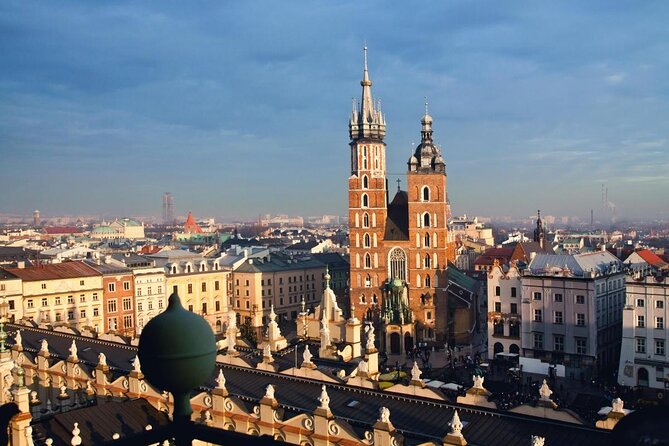
- St. Mary’s Church: highlighted as the biggest Gothic brick building in the world
- Royal Chapel (Kaplica Krolewska): Baroque style with the dome mentioned as the only dome in the center of Gdańsk
- St. Nicholas Church: a Dominican church history starting in the 12th century
By the time you reach the final Old Town food-and-stroll spots—like the Market Hall (Hala Targowa 1896) and Great Mill with the amber museum theme—you’ll have a sense of what kind of Gdańsk you want to return to.
Guide quality: what makes the tour feel fun instead of just factual
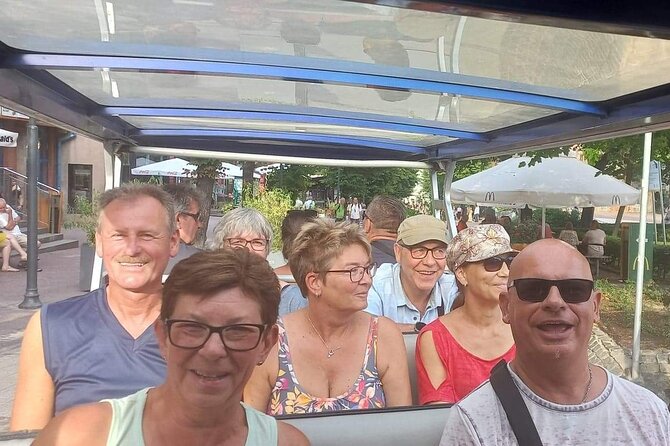
The guide makes the difference between a checklist and a real introduction to Gdańsk.
In the strongest examples, guides such as Michael and Matchek are praised for:
- deep local context
- sharing personal family perspectives tied to WWII and Soviet-era life
- enthusiasm and humor
- staying on schedule without rushing you out the door
There’s also a practical comfort point: one review specifically notes a chill in the golf cart during autumn and suggests bringing a blanket. If you’re traveling in shoulder season, it’s a small thing that can make the ride far more pleasant.
One more thing to consider: not all guides speak at the exact same pace. If you find someone hard to follow due to accent or speed, don’t suffer silently. Ask your guide to repeat or slow down. On an English-language tour, that simple request can turn a good outing into a great one.
Best for who: when this cart tour fits your style
This tour is ideal if you’re the kind of traveler who wants to:
- get oriented quickly in a new city
- see the headline landmarks in one go
- avoid wasting half a day figuring out routes
- choose later which places deserve longer visits
It also works well if you have limited mobility or simply don’t want to stack up sore feet. The golf buggy format is meant for easier movement, and it’s eco-friendly in the sense of being an electric cart.
If you’re the type who loves slow, museum-only days, you might still enjoy it—but treat it as a first-day orientation. Plan at least a bit of free time afterward for the specific highlights that caught your attention.
Should you book the Buggy/Golf Cart Highlights Tour in Gdańsk?
Yes—if your goal is a smart introduction. For the money, you’re paying for speed, structure, and a human guide to connect places like Neptune’s Fountain, the gates, the churches, and the shipyard/Solidarity area into one coherent story.
I’d skip this (or at least think twice) if you want long indoor time at every stop. The tour is designed for moving and seeing, not for deep museum immersion at multiple locations.
If you book, do this: decide before the tour which theme you care about most—Old Town architecture, Amber-and-church art, or Solidarity and WWII memory. The cart will give you the map, and then you can spend your best energy on the places you most want to return to.
FAQ
How long is the Gdańsk buggy tour?
It runs about 2 hours to 2 hours 15 minutes.
What is the meeting point for the tour?
The tour meets at Neptune’s Fountain on Długi Targ, Gdańsk, and it also ends back at the same area.
Do you offer pickup?
Yes. Pickup and drop-off are offered within a 2 km radius from Neptune’s Fountain.
Is there an included drink?
Yes. A drink is included for each tourist, and it can be water, coffee, or beer.
Is the tour guided in English?
Yes, the live guide is offered in English.
What places are included for the amber visit?
The tour includes St. Bridget’s Church, where the Amber Altar is listed, and admission there is included.
Is pickup offered from ports?
No. Pickup is not offered at the ports.
Can I cancel for free?
You can cancel up to 24 hours in advance for a full refund.
What’s the group size?
The tour has a maximum of 30 travelers.