REVIEW · CASABLANCA
Private Marrakech excursion, camel ride or quad from Casablanca
Book on Viator →Operated by SHUTTLE LAYOVER AND TOURS · Bookable on Viator
One long day in Marrakech beats travel stress. This private excursion from Casablanca stitches together classic old-town sights, a modern slice of Gueliz, and a guided camel ride through La Palmeraie. You’ll cover major landmarks without doing the guesswork alone, and your guide helps you move through places that can feel maze-like.
What I like most is the pacing: you get a smart mix of monuments and street life, from the Jemaa el-Fnaa action to the calmer architecture stops. I also like the practical comfort built in—round-trip transport with A/C and Wi‑Fi, plus water, wet wipes, and small sweets to keep you going.
One consideration: it’s an 11–12 hour day, so it’s best if you’re okay with lots of stops and a full schedule rather than long, slow hangs at each site.
In This Review
- Key things to know before you go
- Casablanca to Marrakech: The real deal on timing and comfort
- La Palmeraie camel ride and the Majorelle Garden pass
- Mellah and Bahia Palace: Old neighborhoods and a palace add-on
- Jemaa el-Fnaa and Souk Semmarine: Where Marrakech talks back
- Koutoubia Mosque and Bab Agnaou: Architecture you can actually read
- The Derb Fhal Zefriti Medina walk: Daily life, hammams, and artisan work
- Gueliz in 30 minutes: Morocco’s modern face
- What you’re actually paying for: value and small extras
- Who this private Marrakech day trip fits best
- Should you book this tour?
- FAQ
- Is hotel pickup and drop-off included?
- What time does the tour start?
- How long is the whole experience?
- Is this a private tour?
- What’s included during the La Palmeraie camel ride stop?
- Which attractions include admission tickets in the package?
- What costs extra during the tour?
- What vehicle comfort is provided?
- What does the Gueliz stop include?
- What’s the cancellation policy?
Key things to know before you go
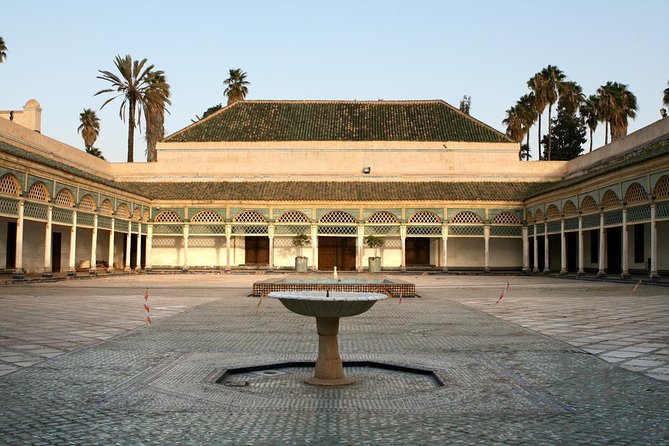
- Private Casablanca pickup and drop-off for a smoother start to a long day
- La Palmeraie camel ride (about 45 minutes) with admission included
- Medina highlights plus a modern contrast with Gueliz stops later
- Souks with real negotiation time at Souk Semmarine, not just a quick photo stop
- Iconic architecture stops like Koutoubia Mosque and Bab Agnaou
- Bring a realistic budget since Bahia Palace admission isn’t included
Casablanca to Marrakech: The real deal on timing and comfort
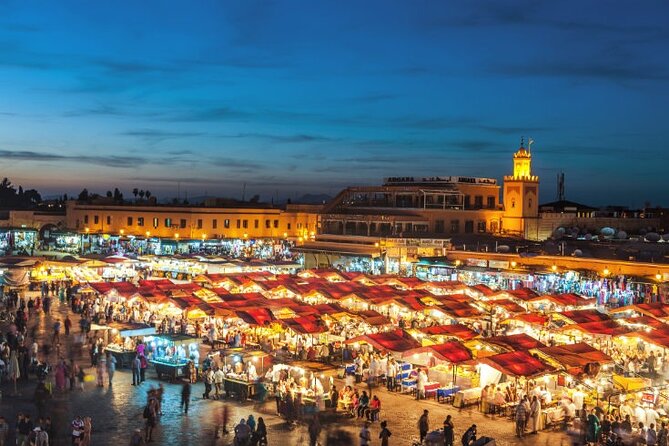
This is a “morning out, evening back” kind of outing. You start at 7:30 a.m. with pickup from downtown Casablanca, then you’re on the road long enough to feel like it’s truly a day trip. The tour info notes about 6 hours round-trip driving time (when time allows), so you’re trading a bit of rest for maximum sightseeing.
You’ll ride in an A/C car or van with Wi‑Fi, plus bottled water, wet wipes, and sweets. That sounds small, but after hours on the road, it makes a difference—especially if you’re the type who hates hunting down basic stuff during the day. The tour is also private, meaning it’s just your group, not a big crowd funnel.
The other hidden advantage: the “official local guide” time starts when you’re actually in Marrakech. That’s where you gain value—getting your bearings fast, knowing when to move and when to slow down, and keeping the day from turning into a series of lost hours.
La Palmeraie camel ride and the Majorelle Garden pass
La Palmeraie is the classic palm grove set-up for Marrakech camel time. The program includes a guided camel ride for about 45 minutes, and admission is included. If you want a taste of Morocco that isn’t just about standing in lines, this stop is a good one.
Here’s how I’d plan your mindset for the camel part: it’s a fun, photo-friendly activity, but it’s also an animal encounter. Wear shoes you trust, keep your belongings secure, and don’t expect it to run like a theme park—this is hands-on and outdoors.
One more thing: the tour includes passing in front of the Majorelle Garden rather than a full visit there. If you’re planning to actually tour Majorelle (and you’ve got it on your “must-see” list), you’ll want to treat that as separate. For many people, it’s still a helpful “oh, that’s where it is” moment while you’re moving between zones.
Mellah and Bahia Palace: Old neighborhoods and a palace add-on
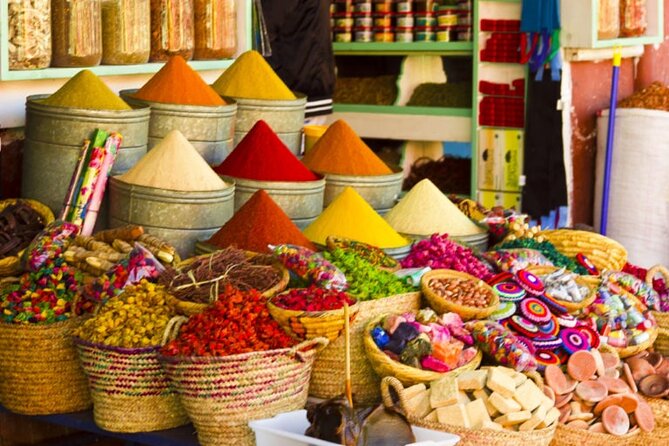
You’ll head to Mellah, Marrakech’s older Jewish quarter area, for about 1 hour. The tour includes admission here, and you’ll have time to grab souvenir photos at each stop. Mellah is where Marrakech starts feeling layered—religion, community, architecture, and daily life mixed together in tight streets.
What I like about this stop is the contrast it gives you. Mellah isn’t just pretty; it’s historical texture. You start to see that Marrakech isn’t one single postcard. It’s sections, eras, and communities that all overlap.
Next up is Bahia Palace. You get about 1 hour there, but this is one of the few places where extra money is needed: admission isn’t included and costs $7 per person. That’s not a deal-breaker, but you should budget for it.
If you’re the kind of traveler who likes details, Bahia Palace is where you’ll see the handiwork—decorative walls, ornate interior spaces, and mosaic work that helps explain why Moroccan craftsmanship is so widely respected.
Jemaa el-Fnaa and Souk Semmarine: Where Marrakech talks back
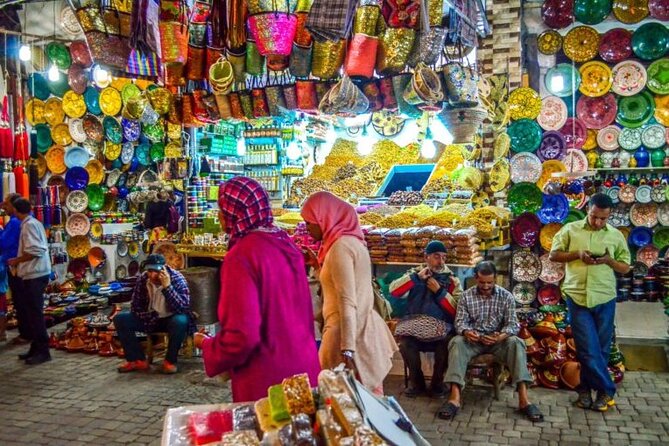
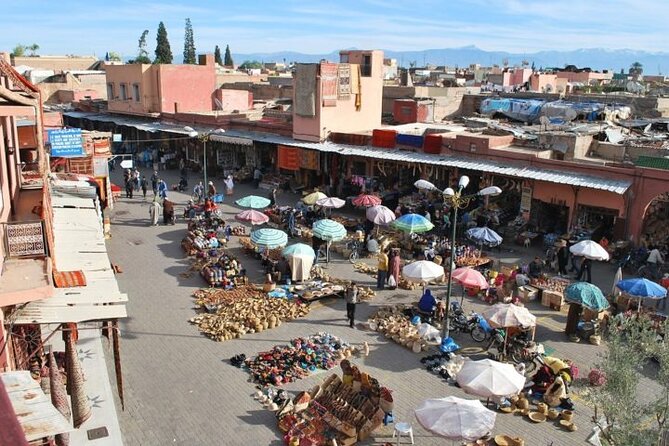
If you only saw one thing in Marrakech and nothing else, Jemaa el-Fnaa would still be the best bet. You’ll have about 2 hours at the main square, and admission is included. Expect orange juice kiosks, snake charmers, water sellers, and women offering henna. This is also where markets and street energy overlap—so you’ll see crafts, activity, and constant motion.
Practical tip: don’t try to “win” the square by seeing everything. Pick a couple of things you want—maybe henna for color, maybe a slow loop through nearby stalls—and let the rest of the spectacle wash over you. That way you actually enjoy it instead of feeling like you’re trapped in a moving crowd.
Then comes Souk Semmarine, about 1 hour in the traditional market streets. Admission is included. This is a market designed for browsing and buying: spices, textiles, jewelry, pottery, and other crafts. And yes, the tour encourages negotiation—you’ll have a real chance to practice bargaining instead of being herded through like a photo op.
One of the best values here is timing: the guide helps you move through the right aisles and avoid wasting time on the wrong stalls. Some of the strongest tour feedback I’ve seen is about guides who can get you where you want without turning shopping into stress.
Koutoubia Mosque and Bab Agnaou: Architecture you can actually read
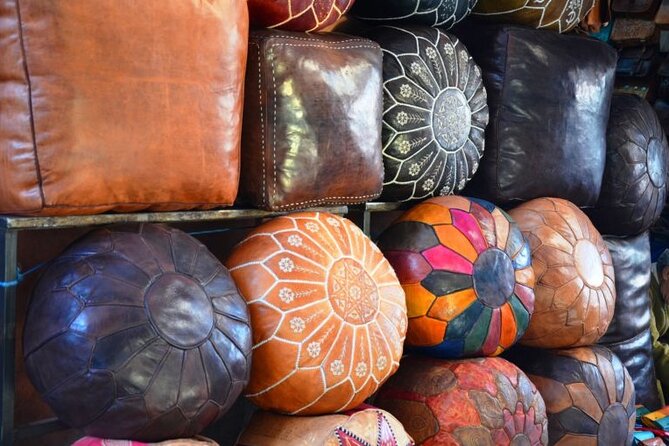
After the noise of the square and souks, the day shifts into architecture mode. At Koutoubia Mosque, you get about 30 minutes and admission is included. Koutoubia is the large 12th‑century mosque in Marrakech, famous for its 69-meter minaret, plus ornamental zellige (tilework), stucco details, and carved wooden touches. The big courtyard and the view from the surrounding area help you understand why this mosque is such a symbol.
You don’t need to be an architecture expert to appreciate it. Think of this stop as your “Marrakech geography lesson.” Once you’ve seen the scale of Koutoubia, the city’s layout makes more sense.
Next: Bab Agnaou for about 1 hour. Admission is included. This is one of the old city’s monumental gates, built in the 12th century and noted for medieval Moroccan architecture. The tour time lets you see construction techniques, the decorative motifs, and even take in a panoramic view from the top ramparts.
If you enjoy photo stops, this is where you get angles that feel different from the medina alley shots. If you don’t enjoy photo stops, this is still worth it because it’s a clean way to understand the defensive and ceremonial role of city gates.
The Derb Fhal Zefriti Medina walk: Daily life, hammams, and artisan work
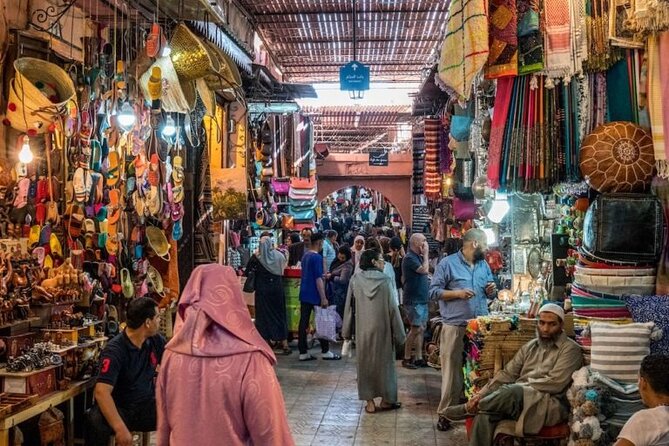
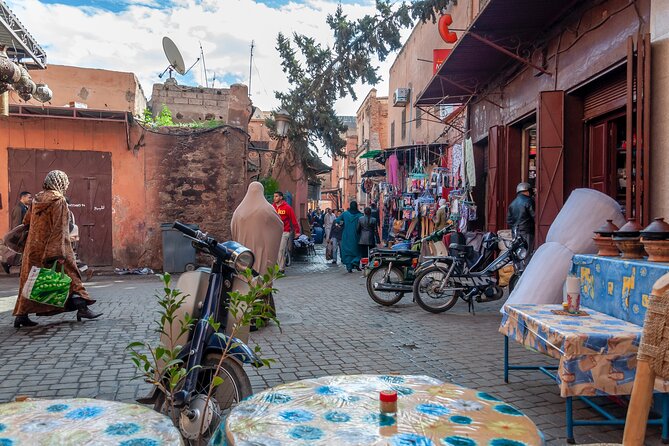
Now you move into the Medina of Marrakesh, focusing on Derb Fhal Zefriti. You’ll spend about 1 hour here, with admission included. This is the neighborhood-style part of the tour—narrow cobbled streets, traditional adobe houses, fountains, hammams and public baths, and workshops of local artisans.
This stop works well because it shifts you from “big monuments” into “how people live around them.” You’ll see everyday Morocco, not just museum Morocco. And if you’re interested in food, this part can include tasting local culinary specialties in small traditional restaurants.
A quick reality check: medina areas are full of shops and side streets, and the pace can feel intense. The best way to enjoy it is to let the guide steer. You’ll usually get better moments that way, especially if you’re trying to balance walking with shopping and photos.
Gueliz in 30 minutes: Morocco’s modern face
Not everything in this day is medieval. Later, you get a quick look at Gueliz, about 30 minutes, and it’s free for this segment. You’ll see major arteries and landmarks such as Place Mohammed V, Place de la Liberté, the Royal Theater, and the railway station.
This section matters because it prevents Marrakech from becoming one-note. In Gueliz you’ll notice wider streets and different building styles, including hints of art deco and French colonial influences. It’s fast, but it helps you understand how the city grew beyond its walls.
If you’ve only got one day total, those 30 minutes are a smart use of time. If you want a deeper modern-city experience, you’d need a separate plan—but for a day trip from Casablanca, this works.
What you’re actually paying for: value and small extras
At $130 per person, this excursion is priced like a full service day. You’re paying for the big-ticket parts: a private transport setup from downtown Casablanca, the long driving day, and an official local guide who helps with timing and navigation through multiple key areas.
Your included items are practical: bottled water, wet wipes, sweets, A/C, and Wi‑Fi. Those don’t sound glamorous, but on a 11–12 hour itinerary they keep the day comfortable.
Your extra costs are limited but real. Bahia Palace admission is not included and runs $7 per person. Also, drinks aren’t included, so plan for your own water refills or purchases beyond the bottled water provided.
One more value point: group discounts are available, and the tour is mobile-ticket friendly. If you’re traveling in a group, the private format can feel like strong value compared with piecing together taxis and separate guide arrangements.
Who this private Marrakech day trip fits best
This is a great fit if you:
- want a full Marrakech sampler in one day (medina icons + souks + modern Gueliz)
- prefer having a guide handle navigation through busy spots
- like structured itineraries but still want time to browse and negotiate
It’s also a strong option if you’re nervous about getting overwhelmed in the old city. When guides are good at pacing, you spend your time where it counts—like moving through Souk Semmarine without missing key lanes.
From the feedback style I’ve noticed, guides and drivers often get praise for communication and timing. Names that show up include Youssef and Mohammed as local guides, and Simo, Nouridinni, Ahmed, and Ilyas as drivers. That doesn’t mean every match will be the same, but it suggests the provider tends to staff people who can manage the day in real-world conditions.
Should you book this tour?
I’d book it if you want one efficient day that covers the headline Marrakech experiences: camel time in La Palmeraie, the Mellah area, a marketplace loop at Jemaa el‑Fnaa and Souk Semmarine, architecture at Koutoubia and Bab Agnaou, plus a neighborhood-style Medina walk and a quick Gueliz contrast.
Skip it (or plan differently) if you’re looking for a slow, unhurried Marrakech day. This route is built for momentum. You’ll be on the move for most of the day, and it’s not the best choice if your ideal pace is wandering without a schedule.
If you do book, go in prepared: wear comfortable shoes, budget for Bahia Palace admission, and choose what you want most at the square and souks. When you pick your priorities, the long day feels worth it.
FAQ
Is hotel pickup and drop-off included?
Yes. The tour includes pickup and drop-off in downtown Casablanca.
What time does the tour start?
The start time is 7:30 a.m.
How long is the whole experience?
It runs about 11 to 12 hours.
Is this a private tour?
Yes. Only your group participates.
What’s included during the La Palmeraie camel ride stop?
You get a guided camel ride of about 45 minutes, and the admission ticket is included.
Which attractions include admission tickets in the package?
Admission tickets are included for La Palmeraie, Mellah, Jemaa el-Fnaa, Souk Semmarine, Koutoubia Mosque, Bab Agnaou, and the Medina/Derb Fhal Zefriti segment.
What costs extra during the tour?
Bahia Palace admission is not included and costs $7 per person. Drinks are also not included.
What vehicle comfort is provided?
You’ll have a car or van with A/C and Wi‑Fi, plus a multilingual driver.
What does the Gueliz stop include?
Gueliz is covered with about 30 minutes of sightseeing, and that part is free.
What’s the cancellation policy?
Free cancellation is available up to 24 hours in advance for a full refund. If you cancel less than 24 hours before the start time, the amount paid is not refunded.