REVIEW · KRAKOW
Krakow: City Sightseeing Tour Eco Electric Buggy Golf Cart
Book on Viator →Operated by citytourkrakow.com · Bookable on Viator
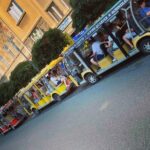
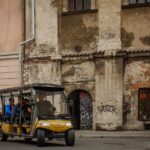
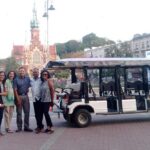
Kraków has a lot to see in 90 minutes. This eco electric buggy tour lets you cruise between major sights with warm blankets/heating and a very human-sized group (max 50), so your legs get a break without missing the big picture. The only real trade-off: on cold days the carts can feel a bit cramped, and the ride can be bumpy—plan for it, especially if you’re expecting long, inside-the-building time at every stop.
The route pairs moving stories with practical sightseeing, from Church on the Rock (Skałka) to Kazimierz’s synagogue cluster and then down into Podgórze. Guides I saw mentioned by name include Olivia, Natalie, Jacob, Philip, and Oskar, and the experience blends live explanations with audio narration so you can follow even when you’re busy snapping photos.
In This Review
- Key highlights I’d plan around
- Eco electric buggy comfort in Kraków: the real advantage
- Price and value: what you’re paying for at about $28.88
- Where the tour starts (and why it matters for your day)
- Church on the Rock (Skałka): a quick stop that sets the tone
- Plac Wolnica in Kazimierz: learning the city by its old trade routes
- Corpus Christi Basilica area: the monastery church connection
- Multiple synagogues in Kazimierz: what you’re really seeing
- Tempel Synagogue
- Kupa Synagogue
- Izaak Synagogue (Isaak Jakubowicz)
- High Synagogue
- Old Synagogue (Alta Shul)
- Wolf Popper Synagogue
- Remah Synagogue
- Augusta Rubinstein story point (Augusta – Gitte Rubinstein)
- Old district streets and courtyards: what those quick passes teach
- Podgórze: Ghetto Heroes Square and the Eagle Pharmacy Museum
- Ghetto Heroes Square
- Eagle Pharmacy Museum
- Oskar Schindler’s Enamel Factory and the old ghetto wall: setting up future visits
- Guides, audio narration, and what to expect in the cart
- When to go and how to prepare: cold carts, photo angles, and timing
- Should you book this Kraków eco buggy tour?
- FAQ
- How long is the Krakow City Sightseeing Tour Eco Electric Buggy Golf Cart?
- How much does the tour cost?
- Is pickup offered?
- What language is the tour in?
- How many stops will I see?
- Does it include Church on the Rock (Skałka)?
- Do you see Schindler’s Enamel Factory?
- Is the tour group limited in size?
- Are service animals allowed?
- Can I cancel for a refund?
Key highlights I’d plan around
- Eco electric golf cart comfort: Warmth on a winter visit, plus blankets and heating.
- A synagogue-focused Kraków overview: You’ll pass and learn about multiple historic houses of prayer in Kazimierz.
- Ghetto context in the right places: Ghetto Heroes Square and the Eagle Pharmacy Museum add weight to the story.
- Big sights without the walking pain: You cover a lot in about 1 hour 30 minutes.
- Small-group feel (up to 50): Easier than a full-size bus for photos and listening.
- Free entry at Church on the Rock (Skałka): A quick stop that starts the tour strong.
Eco electric buggy comfort in Kraków: the real advantage
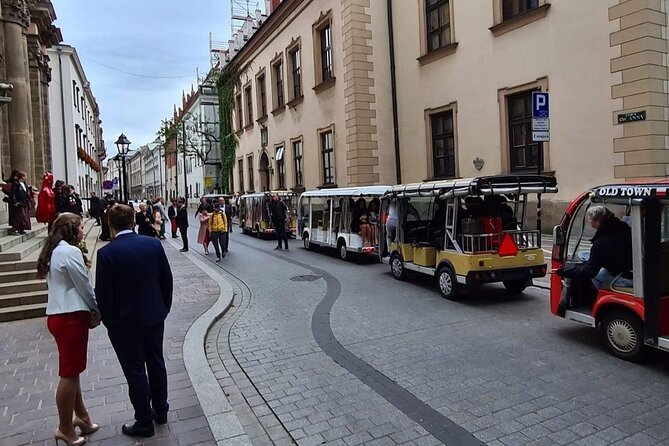
If you’ve got limited time, too much walking on your itinerary, or just plain winter-whiplash weather, this format makes sense. The electric buggy/golf-cart style ride keeps you moving while giving you a steady platform for photos and listening.
What I like most is that the operator plans for comfort. On cold days, the cars run with heating and blankets, so you’re not white-knuckling your way through the Jewish quarter just to say you did it. That matters because Kazimierz and Podgórze are best experienced at a slow, attentive pace—not with your coat half-zipped and your fingers numb.
The other big perk is group size. This tour caps at 50 travelers, which helps. You still get the energy of a group, but it’s not that school-bus crush feeling that can turn sightseeing into a shuffle.
Price and value: what you’re paying for at about $28.88
At roughly $28.88 per person for about 1 hour 30 minutes, you’re buying two things: transportation and interpretation.
You could cover some of these areas on foot, but you’d lose a ton of time crossing between districts. By bundling Kazimierz and Podgórze into one short ride, you get a practical introduction that helps you decide what to revisit later—especially if you’re spending only part of a day in Kraków.
It’s also good value because the tour doesn’t just drive by landmarks. You get a mix of live guidance and audio narration, with guides mentioned as being friendly and very clear in English. Several stops are designed as quick “here’s what matters” moments rather than long museum marathons, so you don’t pay for sitting—you pay for orientation.
Where the tour starts (and why it matters for your day)
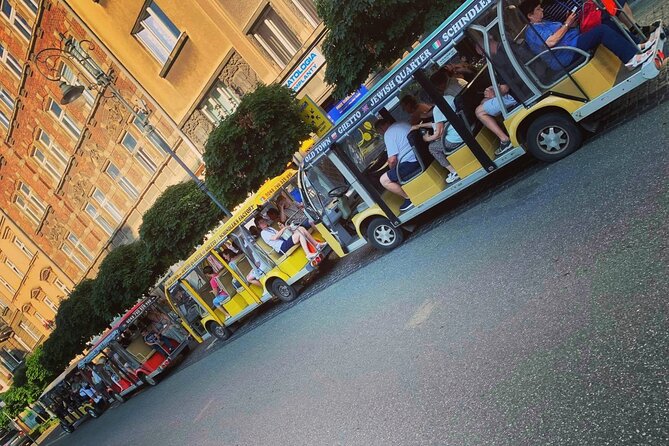
Your meeting point is the Parking 24H Kraków Old Town Car Park, at Mikołaja Zyblikiewicza 2 (31-029 Kraków). The big practical win: this is a straightforward pickup spot where you can orient yourself, rather than hunting down a hidden side street.
The tour also offers pickup, so if you’re trying to reduce friction on arrival day, this helps. You’ll use a mobile ticket, so you don’t need to print anything.
If you’re planning photos, arrive a few minutes early. The tour is timed, and even though it’s only 90 minutes, those minutes add up when you’re positioning for good angles.
Church on the Rock (Skałka): a quick stop that sets the tone
The tour begins at Church on the Rock (Kosciol na Skalce), known for Saint Michael the Archangel and Saint Stanislaus the Bishop and Martyr Basilica. Skałka literally means “a small rock,” and the site is tied to a dramatic moment from 1079 when Saint Stanislaus was killed on orders of King Bolesław II the Bold.
This matters because it gives you a religious-and-historical frame right away. You’re not only seeing buildings—you’re learning why power, faith, and punishment show up in Kraków’s story again and again.
Timing is tight but manageable: the stop runs about 10 minutes, and there’s no admission ticket cost noted for this part. It’s the kind of stop that’s short enough to keep the schedule moving, but meaningful enough to wake up your attention.
Plac Wolnica in Kazimierz: learning the city by its old trade routes
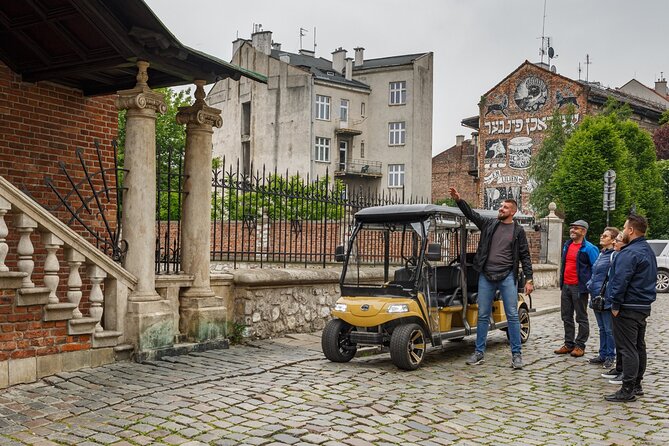
Next comes Plac Wolnica, tied to the original market structure of Kazimierz. This square traces back to the city’s founding in the 1300s, when Kazimierz was being set up with market and governance functions.
The name comes from the Latin concept of free trade, connected to meat trading privileges outside the traditional stalls. You’ll hear how the square once handled commerce, administration, and social life—plus details about surrounding buildings like stalls and scales.
Why I like including this on a tour like this: it stops the story from becoming only “architecture and tragedies.” It reminds you that neighborhoods like Kazimierz were once built for everyday life: trade, governance, and community rhythm.
Corpus Christi Basilica area: the monastery church connection
The tour also includes a basilica associated with monastery use and long construction—from 1340 into the mid-1400s. It was intended as a monastery church, and the area even includes a monastic cemetery nearby.
A key historical detail is that in 1404, King Władysław II Jagiełło gave the church to the Canons Regular of the Lateran. That kind of ownership shift is exactly the sort of thing that helps you understand why Kraków’s religious sites look the way they do and who shaped them over time.
If you like your history specific (names, dates, institutions), you’ll appreciate this stop. If you’re expecting a long interior visit at every location, keep expectations realistic: this is a short ride with many “quick learning” stops.
Multiple synagogues in Kazimierz: what you’re really seeing
One reason people like this tour is that it isn’t just one synagogue. In Kazimierz you’ll get time to take in several historic sites that show different eras, styles, and traditions.
Here are the synagogue stops you can expect, and what each one adds to the bigger picture:
Tempel Synagogue
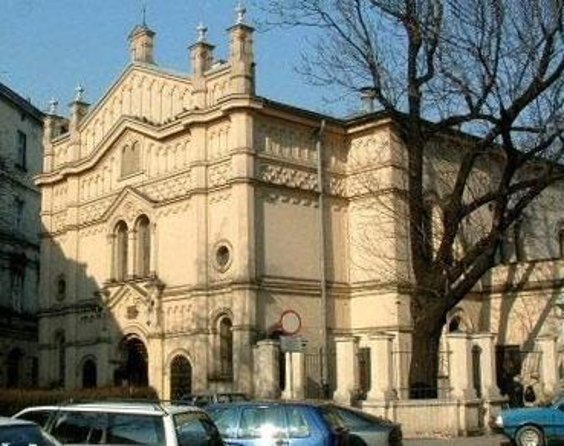
The Tempel Synagogue (Synagoga Tempel) is described as a major worship place and also a center of Jewish culture, hosting concerts and meetings—especially around festivals. This is the reminder that heritage isn’t only “old ruins.” It’s also living community space.
Kupa Synagogue
The Kupa Synagogue (Synagoga Kupa) dates to the 17th century and sits in the former Jewish quarter. It’s used for religious ceremonies and cultural festivals, including the annual Jewish Culture Festival in Kraków.
What this gives you: an idea of continuity—how the neighborhood identity survives through use, not just memory.
Izaak Synagogue (Isaak Jakubowicz)
The Izaak Synagogue is an Orthodox Jewish synagogue from 1644, named for Isaac the Rich, a banker to King Ladislaus IV. The design is credited to Italian-born architect Francesco Olivierri.
For architecture fans, this is a strong thread: it’s not random building time. There’s patronage and design history behind it.
High Synagogue
The High Synagogue (also nicknamed the Tall Synagogue) is an inactive 16th-century Orthodox synagogue. It’s noted as the city’s tallest synagogue and an example of late Renaissance architecture, with the prayer hall described as upstairs.
This stop is useful when you want to picture how worship spaces worked—up close to how the community organized prayer in the building itself.
Old Synagogue (Alta Shul)
The Old Synagogue (Synagoga Stara) is described as the oldest synagogue building still standing in Poland and one of Europe’s most precious landmarks of Jewish architecture. It served as a key religious, social, and organizational center for Kraków’s Jewish community until World War II.
This is often the emotional core of the Jewish-quarter overview: it’s old, it’s central, and it forces you to connect the dots between community life and later destruction.
Wolf Popper Synagogue
The Wolf Popper Synagogue (Synagoga Poppera / Bociana) is described as once one of the most splendid prayer houses in Kazimierz, founded in the early 1600s. There’s even detail about decorative symbols on the former doors—an eagle, leopard, lion, and buck deer tied to traits of a devout man. Today, it serves as a bookshop and an art gallery upstairs.
This stop helps you see how buildings can shift roles while still keeping their identity in public memory.
Remah Synagogue
The Remah Synagogue (Synagoga Remu) is small and from the 16th century, named after Rabbi Moses Isserles (acronym ReMA). It’s described as one of the two active historic synagogues in Kraków.
If you want the most practical “this is still in use” feeling, this is likely it.
Augusta Rubinstein story point (Augusta – Gitte Rubinstein)
You’ll also hear a biographical thread about Augusta Rubinstein, connected to philosopher Martin Buber as a cousin. That kind of story helps the neighborhood feel like people lived here—not just that events happened here.
It’s also the kind of detail that makes a short tour feel longer and more personal.
Old district streets and courtyards: what those quick passes teach
Not every stop in this tour is a major monument with a big “stand back” sign. Some of the narration ties to the way Kazimierz’s edges and lanes developed—like the mention of Libuszhof, a former complex of streets and buildings whose shape changed in the 1800s. There’s also a reference to houses tied to a Jewish hospital at the Kupa synagogue along the defensive walls.
You won’t get a guided walking tour of every alley, but you do get context. And that context is what makes it easier to later explore on your own with better questions.
If you like to get your bearings fast, these “between major stops” moments are more valuable than they sound.
Podgórze: Ghetto Heroes Square and the Eagle Pharmacy Museum
This is where the tour stops being just architectural sightseeing and becomes history with consequences.
Ghetto Heroes Square
Ghetto Heroes Square (also historically called Mały Rynek and Plac Zgody during different periods) was within the Kraków ghetto from 1941 to 1943. It was a concentration point before transports to concentration camps. The square includes the detail about Pharmacy Under the Eagle at number 18, run by Tadeusz Pankiewicz, described as the only non-Jewish inhabitant with rights to stay.
This is handled in the tour format like a “you are standing where something happened” moment. It doesn’t try to replace a museum. It sets the stage.
Eagle Pharmacy Museum
Right on the square’s edge is the Eagle Pharmacy Museum. The information provided includes that the proprietor was Jozef Pankiewicz (since 1910) and then his son Tadeusz Pankiewicz (running it since 1933). The pharmacy was one of the four pharmacies in Podgórze before WWII and served both Polish and Jewish residents.
During the ghetto period, it’s highlighted as the only pharmacy inside the ghetto borders, and the proprietor is described as the only Pole with rights to stay in it.
Even if you only skim the surface as you ride through, this stop gives you a specific way to understand survival logistics—where help existed, and what it cost to protect others.
Oskar Schindler’s Enamel Factory and the old ghetto wall: setting up future visits
The tour includes Oskar Schindler’s Enamel Factory, now hosting two museum branches: contemporary art and a historical museum branch. You’ll also see the old ghetto wall.
This combination is useful because it helps you build a mental map. Instead of going from one dramatic photo to another, you connect the industrial site to the ghetto geography and the broader wartime environment.
One caution: because the tour is designed for many stops in a short window, you might not get the chance to go inside every major museum building. Some parts are positioned for viewing and learning, not deep-ticket time. If Schindler’s factory is your #1 priority, I’d plan to do it again later with a dedicated ticket or longer visit.
Guides, audio narration, and what to expect in the cart
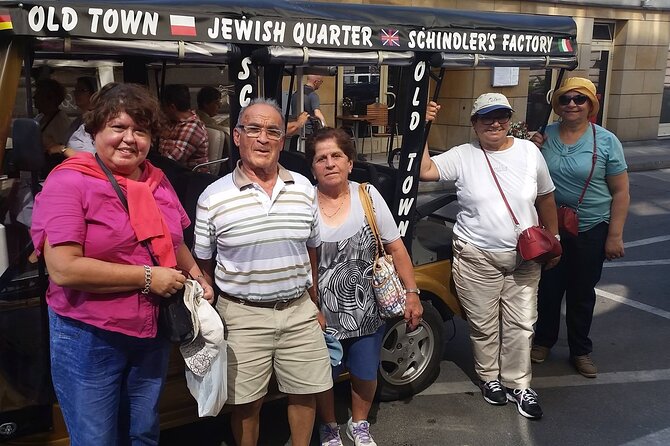
The tone on this tour seems to depend on the guide, but the consistent pattern is clarity and pacing. Guides named in connection with the experience include Olivia, Natalie, Jacob, Philip, and Oskar. Several guests highlight humor, careful driving, and explanations delivered in clear English.
Audio narration is also part of the experience, and the cart setup means you can listen while looking. That’s especially helpful when you’re moving through areas with lots of detail.
Two practical notes:
- The ride can be bumpy, so keep your balance when shifting to look around.
- In cold weather, wear layers that don’t leave you feeling trapped. One of the weaker moments described is a more crowded-than-expected cart feeling, so if you’re traveling with a group or you’re sensitive to tight spacing, consider going with a flexible mindset and arriving early to settle in.
When to go and how to prepare: cold carts, photo angles, and timing
This tour can be a lifesaver in winter because you’re not walking for 90 minutes straight. The cars are described as warm and toasty, and that changes the experience from miserable to manageable.
Still, plan your approach:
- If you can choose, daylight makes it easier to spot details and line up photos.
- Bring a camera/phone strap if it’s slippery with gloves and heavy sleeves.
- If you’re sensitive to audio, arrive with working headphones and test them before you get on the cart (the narration blend is part of the experience, but a few people reported audio problems).
Also, consider timing in your overall Kraków stay. An overview tour is best earlier, when it can help you decide what to revisit.
Should you book this Kraków eco buggy tour?
Yes, if you want a practical, efficient introduction to Kraków’s Kazimierz synagogues and Podgórze ghetto sites without paying for a full-day walking route. The warm cart setup, the short learning stops, and the way the tour ties neighborhood geography to history are strong reasons to book.
I’d be a little cautious if your priority is spending long inside specific attractions, especially Schindler’s factory. This tour is designed to cover many sights and give context, not to replace deeper museum visits.
My best advice: book it early in your trip or early in the day, then use what you learn here to choose what you want to revisit with more time—because that’s how you turn an overview into a real, personal Kraków story.
FAQ
How long is the Krakow City Sightseeing Tour Eco Electric Buggy Golf Cart?
It runs for about 1 hour 30 minutes (approx.).
How much does the tour cost?
The price is $28.88 per person.
Is pickup offered?
Yes, pickup is offered, and the tour starts at the Parking 24H Kraków old town car park at Mikołaja Zyblikiewicza 2.
What language is the tour in?
The tour is offered in English.
How many stops will I see?
The tour includes stops at nearly 24 different sights.
Does it include Church on the Rock (Skałka)?
Yes. The Church on the Rock stop is listed as having a free admission ticket and lasts about 10 minutes.
Do you see Schindler’s Enamel Factory?
Yes, Oskar Schindler’s Enamel Factory is included as a stop on the tour route.
Is the tour group limited in size?
Yes, it has a maximum of 50 travelers.
Are service animals allowed?
Yes, service animals are allowed.
Can I cancel for a refund?
Free cancellation is available, and you can cancel up to 24 hours in advance for a full refund. If you cancel less than 24 hours before the start time, the amount paid is not refunded.