REVIEW · PHOENIX
From Phoenix: Sonoran Desert Guided ATV Training
Book on GetYourGuide →Operated by Arizona Outdoor Fun · Bookable on GetYourGuide
Hitting the throttle teaches fast. This 1-hour ATV training in the Sonoran Desert is all about learning real off-road skills on a marked test course, with professional coaching from a certified guide. I like that it’s not just a ride for the photo op. You’ll get focused safety training before you start moving, so you know what to do when the terrain gets bumpy or steep.
The second thing I like is the payoff: you’re out in the wide-open desert with mountain views around you, and you still spend your time practicing turns, bumps, and hills. One drawback to consider is timing. This is training plus riding for up to an hour, not a long desert expedition.
In This Review
- Quick take: key points you should care about
- What This 1-Hour Sonoran Desert ATV Training Actually Feels Like
- Safety Briefing: The Stuff That Makes Riding Less Scary
- The Test Course: Turns, Bumps, and Hills Where Skills Click
- ATV Choice and What’s Included (So You Can Focus on Riding)
- Price and Value: Is $54 for 1 Hour Worth It?
- What to Bring and What Not to Wear (This Matters on ATVs)
- Who This Is Best For (And Who Should Skip It)
- Operating Details: Rain or Shine and Security at Rental Time
- How to Plan Your Day Around This 1-Hour Course
- Should You Book This ATV Training?
Quick take: key points you should care about
- Safety briefing first so you start with the rules of control, not guesswork
- Certified guide coaching through a technical test course with turns, bumps, and hills
- Your own ATV during the training session (you choose your ATV)
- Included helmet and goggles so you don’t have to hunt gear
- Short and focused: 1 hour total, with longer options available elsewhere
What This 1-Hour Sonoran Desert ATV Training Actually Feels Like
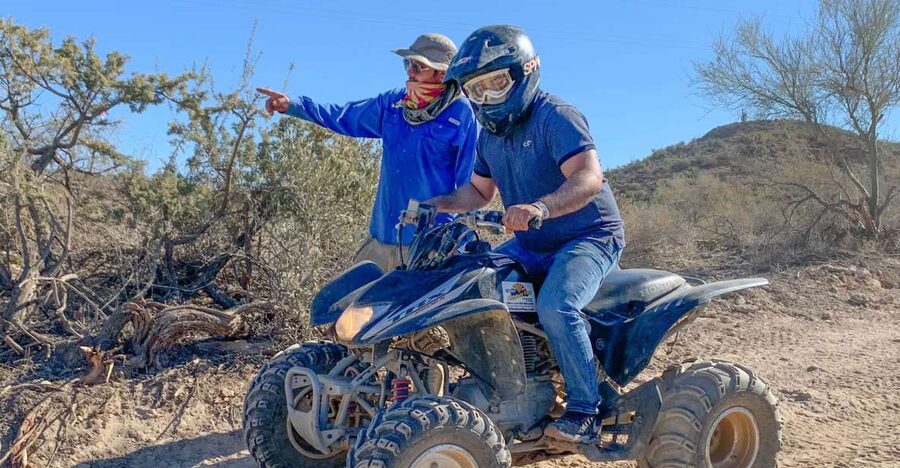
This experience is built for people who want to learn quickly and safely, then immediately test their skills. You start with a briefing on how an ATV works and how to move over rough ground without fighting the machine. Then you shift from instructions to practice right away.
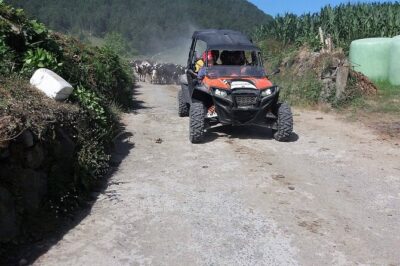
The fun part is that the course isn’t “flat and boring.” It’s designed with the kinds of movements that teach control: turns, bumps, and hills. That matters because real desert riding is rarely smooth. If you’ve ever watched someone struggle on an incline, you already know why training pays off.
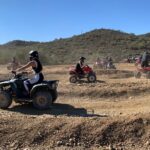
You’ll also be surrounded by the Sonoran Desert setting, with mountain views in the background. Even with a short duration, that scenery adds a lot of satisfaction—this isn’t industrial-looking, and it doesn’t feel like you’re stuck inside a rental lot.
Safety Briefing: The Stuff That Makes Riding Less Scary
You don’t begin with engine noise and chaos. You begin with a safety operations briefing covering how to operate an ATV and how to handle rough off-road terrain. It’s the kind of prep that helps your brain stay calm when the ground changes under your tires.
The briefing is also practical: it’s aimed at helping you understand what to do, not just telling you what not to do. Then your certified guide stays involved while you ride, so you can correct mistakes early instead of learning the hard way.
This is especially helpful if you’re new to ATVs or you’re thinking about trying one for the first time. Many people assume ATV riding is mostly about speed. Here, it’s about control first—then speed comes naturally once you feel stable.
The Test Course: Turns, Bumps, and Hills Where Skills Click
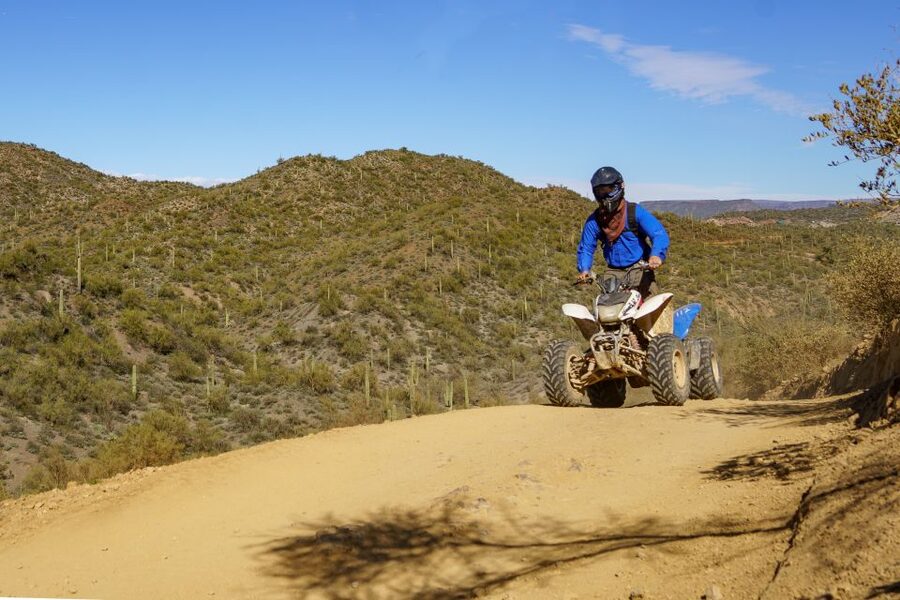
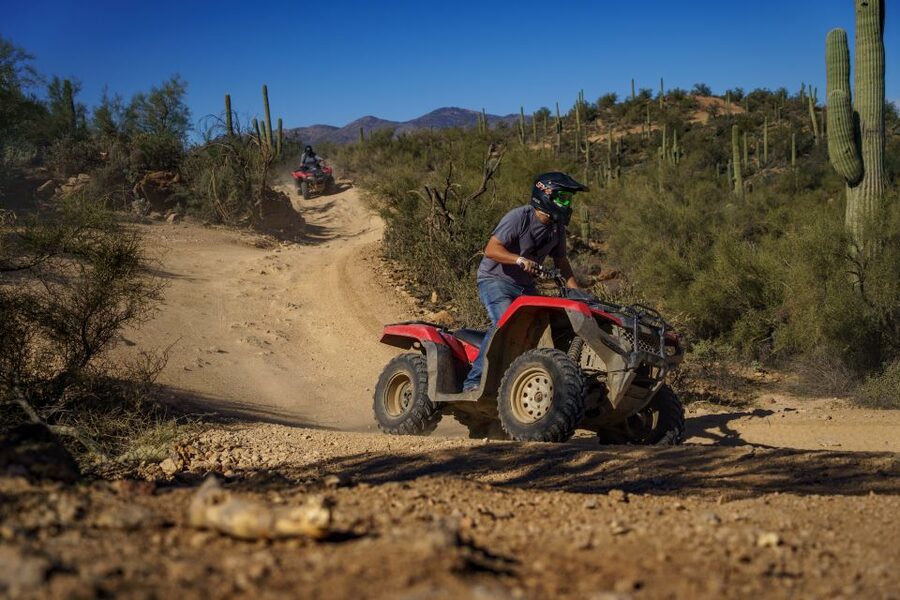
After you’re prepped, it’s time for the test course. Expect a route that challenges you in short bursts: turns that require balance, bumps that test how you handle motion, and hills that force you to think about traction and body position.
The goal of the technical course is simple: help you maneuver confidently in situations that are common in desert riding. A guide can explain concepts all day, but real learning happens when you try it and get feedback while you’re still in motion.
One tip that stands out from the way this experience is taught: you’ll get guidance for going up and down hills. That’s huge, because climbs and descents are where beginners often get tense—either by leaning wrong or reacting late. With coaching, you can build good habits immediately.
And yes, you still get the thrill. You’re not riding on a simulation. You’re speeding around a course in the desert, but with training behind it, so the adrenaline comes with a plan.
ATV Choice and What’s Included (So You Can Focus on Riding)
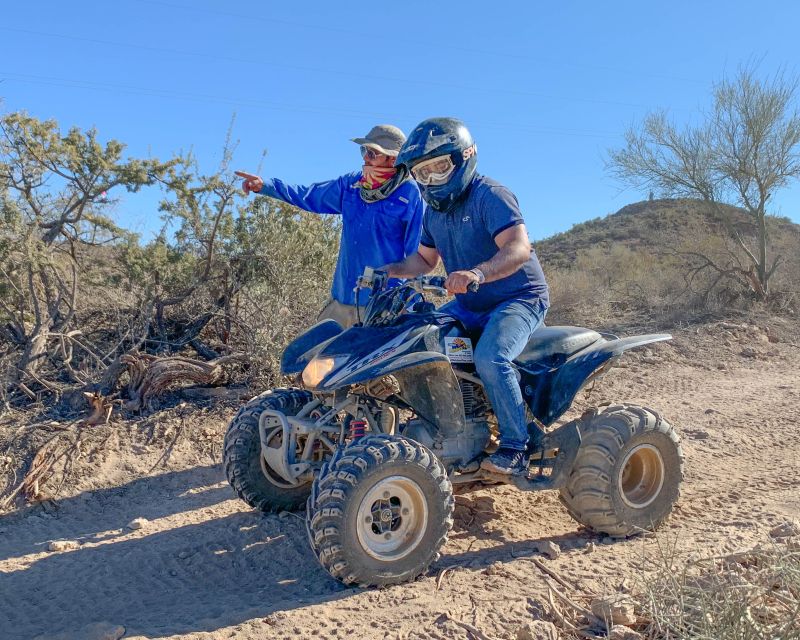
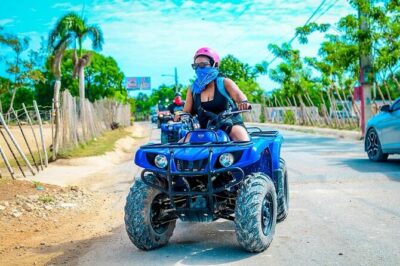
You’ll ride your own ATV for the session, and you get to choose the ATV. That’s meaningful because it helps you match the experience to your comfort level, rather than feeling stuck with a single machine that might not fit you.
What’s included is straightforward and genuinely helpful:
- ATV
- Safety goggles and helmet
- Certified guide
- Safety briefing
- Driving training session
That package is part of why the pricing works if you’re on a budget. At $54 per person for 1 hour, you’re paying for instruction plus the vehicle plus protective gear. You’re not covering the rental without the coaching, which is where many cheap options fall apart.
Price and Value: Is $54 for 1 Hour Worth It?
At $54 per person for a 1-hour session, you’re buying two things: a controlled introduction to ATV riding and professional guidance on a technical course. If your main goal is to learn how to drive an ATV safely (not just to sit on one and hope), this is a solid value.
The key tradeoff is that it’s training time, not a full-day adventure. If you want hours of desert cruising, you’ll likely feel like you ended right when it got good. If that’s your style, consider pairing this type of experience with a longer desert tour elsewhere, since this specific session is training plus riding for up to one hour.
Also note what’s not included: no hotel pickup/drop-off, and no food or drinks. So you’ll want to plan your day around that—show up ready to ride, not hungry, and not depending on someone to transport you from your lodging.
What to Bring and What Not to Wear (This Matters on ATVs)
You should bring:
- Passport or ID card
- Closed-toe shoes
And keep it strict on clothing. No sandals or flip-flops. No open-toed shoes. No slippers. Skirts are not allowed. Crocs are specifically called out as not acceptable for ATV riding, and the recommendation is hiking-style shoes you’d wear for footwork and support.
This isn’t just about rules. On an ATV, your foot position and your grip on the ground matter. Bad footwear can affect comfort and control, and it can slow you down when you need to move safely around the machine.
One more important point: you must be able to show valid ID. The experience requires ID for participation and rental conditions.
Who This Is Best For (And Who Should Skip It)
This 1-hour ATV training course is designed for people who want hands-on instruction. It fits best if you:
- are curious about off-road riding and want coaching fast
- prefer short, structured activities over long tours
- want to practice climbs, turns, and bumps with a guide present
It’s not suitable for:
- children under 16
- pregnant women
- people with back problems
- people with heart problems
- wheelchair users
Also, the ages are split in an important way:
- You must be 18 years old to rent an ATV.
- You must be 16 years old to drive an ATV.
- A valid ID is needed; a driver’s license isn’t required for participation.
If you’re unsure where you land on the suitability list, it’s worth being honest about your health and comfort with rough terrain before booking.
Operating Details: Rain or Shine and Security at Rental Time
The course runs rain or shine, so you should be ready for changing conditions. That matters in the desert because you may get cooler air or slicker surfaces—so your safest bet is to arrive with gear that lets you move confidently and safely.
There’s also how the security works at rental time. The operator holds your ID and a credit or debit card during your rental for security. They do not offer insurance to cover yourself or vehicles. If there’s damage, it will be assessed and paid for at the end of the rental. There’s no damage deposit, but you should still treat the ATV like something you’ll need to protect.
One more rule you’ll want to respect: no alcohol and drugs.
How to Plan Your Day Around This 1-Hour Course
Because this is a training session, not an all-day tour, your planning should be simple:
- Arrive with your ID and closed-toe shoes
- Plan transportation yourself since hotel pickup and drop-off aren’t included
- Expect up to one hour total training and riding
- Bring what you need to stay comfortable, since food and drinks aren’t included
If you’re building a Phoenix-area itinerary, this works well as a midday “learn something and get active” slot. It’s also a great way to test whether ATV riding is your thing before committing to a longer desert tour.
Should You Book This ATV Training?
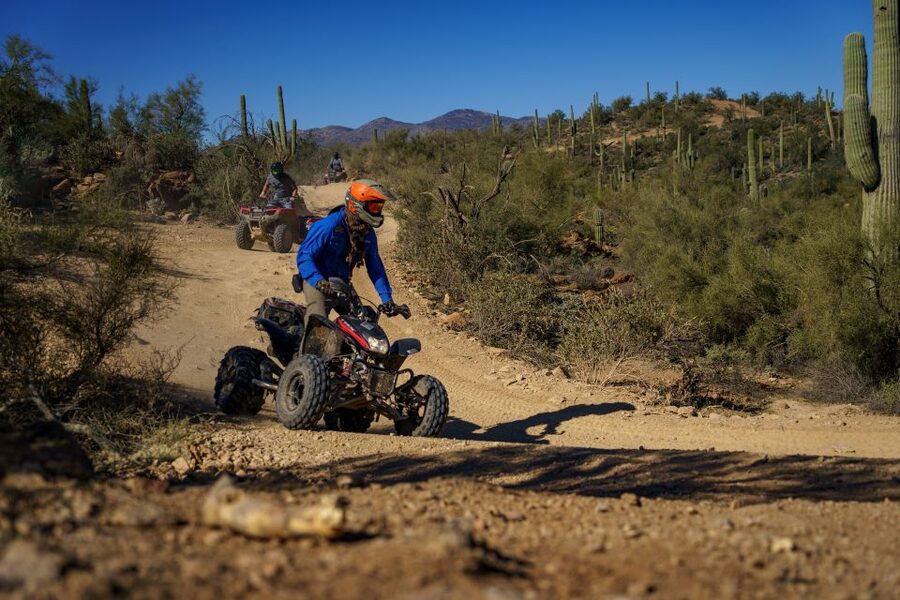
Book it if you want a guided, confidence-building introduction to ATV riding in the Sonoran Desert, and you like the idea of learning on a technical course with coaching. At $54 for a 1-hour session that includes ATV access, safety gear, and instruction, it’s a practical way to spend money where it helps: on safety and technique.
Skip it if you want a long scenic ride, or if your health limits you from rough terrain. And if you’re the type who needs hotel pickup, full meals, or lots of time on the bike, you may find this duration a bit short.
If you want to learn how to drive—uphill, downhill, and through turns—without guessing, this course is built for you.