REVIEW · ATHENS
Ancient Athens Electric ATV Scooter Tour
Book on GetYourGuide →Operated by Smart Urban · Bookable on GetYourGuide
Four wheels, and suddenly Athens feels close. This electric ATV tour is a fast, fun way to see the Acropolis and the Agora area, with eco-friendly riding plus planned stops for views and photos. I love that the route pairs iconic sites with clear context, and I love that the Mia Four ATV setup is designed to feel steady and easy to control after training.
Because it’s only 2 hours, you’ll get highlights and viewpoints—not long, museum-style wandering. And since you’ll be on the scooter for a chunk of the route, you’ll want to feel comfortable riding through Athens streets and doing quick stops on hills.
In This Review
- Quick hits: what you’ll remember
- Why an electric four-wheel ATV works for Athens
- Plaka pickup and the Athens mood you start in
- Acropolis ride-by and the Odeon of Herodes Atticus stop
- Areopagus (Hill of Mars) for views and the idea of justice
- Pnyx and democracy: where the political story turns into a landscape
- Thissio, Keramikos, and the Agora: public life in layers
- Monastiraki Square pass, flea market energy, and Roman layers
- Timing, group size, and how to make 2 hours count
- Price and value: what $58 buys you in Athens time
- Guides, languages, and why it changes the feel
- Who this scooter tour is best for (and who should skip it)
- Should you book this Ancient Athens Electric ATV tour?
- FAQ
- How long is the Ancient Athens Electric ATV Scooter Tour?
- Where does the tour start and where do you return to?
- What’s included in the price?
- Is the tour suitable for children?
- What languages are offered for the live guide?
- Is free cancellation available?
Quick hits: what you’ll remember
- Plaka start point: begin in Athens’ old-school neighborhood vibe and end there too
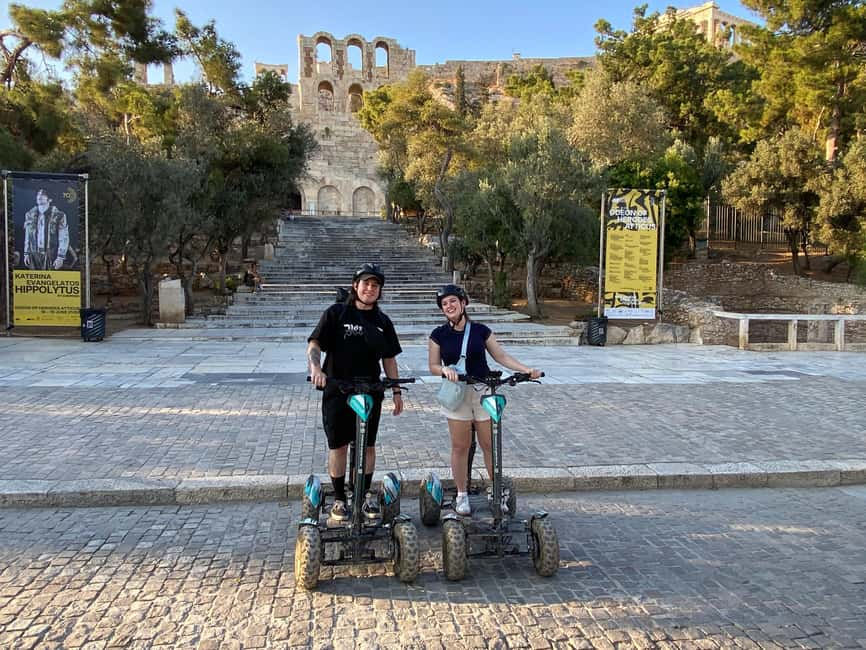
- Acropolis viewpoints plus a theater stop: you’ll ride alongside the UNESCO area and pause at Odeon of Herodes Atticus
- Areopagus + Pnyx: panoramic hills tied to justice and democracy
- Keramikos and the Agora: cemetery/pottery ground and Athens’ public-life center
- Monastiraki area pass: a look toward the flea market energy and the Roman layers of the city
- Small group (up to 10): quicker instruction, easier photo moments, less waiting around
Why an electric four-wheel ATV works for Athens
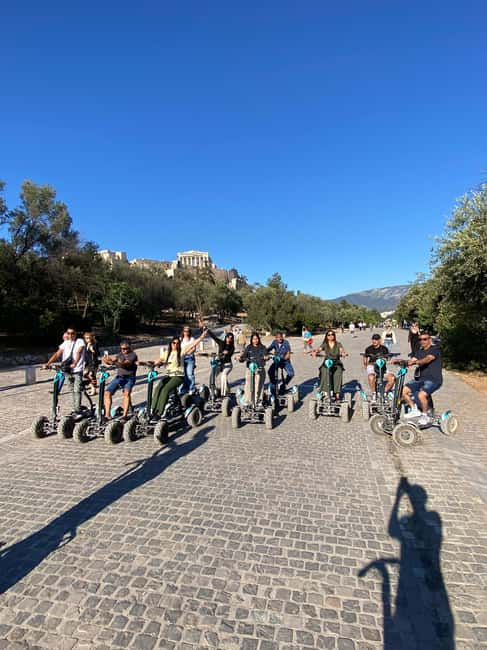
Athens is a place where the best sights aren’t all in one flat straight line. That’s exactly why an electric four-wheel scooter makes sense: it keeps you moving while still letting you pause where the views and ruins actually matter.
This tour uses a four-wheel electric ATV (the Mia Four), with helmet, insurance, and training included. That combo matters more than you’d think. When you’re handling a scooter in real city conditions, the “can I do this?” part is usually the biggest worry. Training helps you get comfortable before you’re surrounded by narrow streets and regular traffic flow.
And because it’s electric, you’re not trading your sightseeing time for fumes, parking games, or time-consuming transfers. It’s also a practical eco choice if you care about cutting emissions while still seeing a lot in a short window.
Plaka pickup and the Athens mood you start in
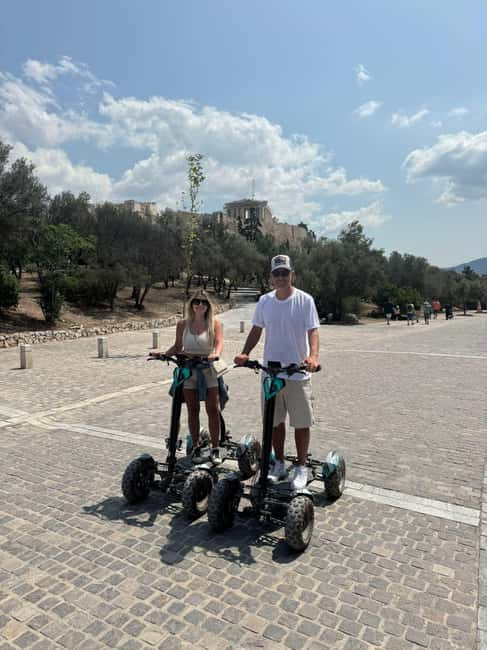
The tour begins in the Plaka neighborhood, which is a smart move because Plaka is where “old Athens” still feels present—touristy, sure, but full of character. You’ll get geared up with the helmet, go through training, and then set off from the starting area with the tour guide.
This matters for first-timers because it anchors the day. Instead of being dropped into the center of traffic and figuring things out, you start in the easiest-feeling part of town and build outward. You also end back in Plaka, so the return doesn’t feel like a separate errand. If you want to grab a drink or snack after, you’re not stuck far away.
Acropolis ride-by and the Odeon of Herodes Atticus stop

One of the biggest draws is how you experience the Acropolis without spending your entire time in a ticket line or navigating on foot for hours. You’ll ride alongside the Acropolis area and get breathtaking viewpoints as you move.
A key first stop is the Odeon of Herodes Atticus, an ancient stone theater. Even if you don’t spend ages reading every sign, the location does something helpful: it gives you scale. You start to see how Athens was built for public gatherings—performances, speeches, civic life—and how the landscape shapes sightlines.
Photo-wise, this section is strong. The tour includes photographic opportunities, and because you’re elevated in places, the angle is often better than you’d get from street level. The only thing to watch: if you’re sensitive to heights or you hate stopping on uneven ground for photos, treat this as a viewpoint-heavy segment and plan your pace.
Areopagus (Hill of Mars) for views and the idea of justice
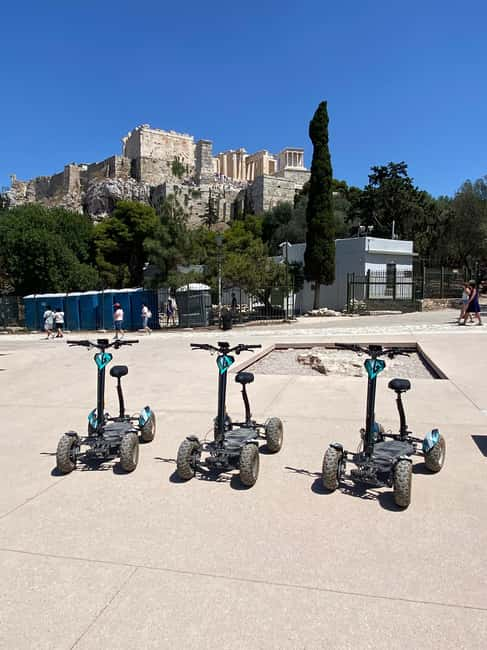
After the Acropolis area, you’ll head to the Hill of Mars (Areopagus). This is where the tour earns its “more than sightseeing” feeling. Areopagus is tied to ancient judicial proceedings, so the guide isn’t just pointing at rocks—they’re connecting the hill to how Athenians handled decisions and public order.
From the practical side, it’s a payoff moment. You get panoramic views of Athens and the Acropolis area, which helps you understand the city’s layout. That mental map is useful later, especially if you plan to explore on your own after the tour.
As a small consideration: hills mean slower movement and more intentional stops. The route is short, but you’ll be actively engaged—listen to the guide, grab your photos, and then roll on.
Pnyx and democracy: where the political story turns into a landscape
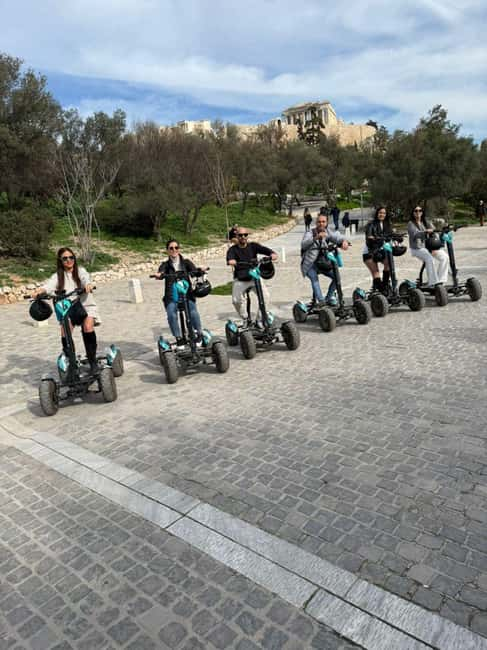
Next is the Hill of Pnyx, described as the birthplace of democracy, where ancient citizens assembled to make political decisions. This is one of those stops where context changes your experience. Standing there (or looking out from there) makes the idea of civic gathering feel less like a textbook term and more like a physical place.
The tour also keeps this portion photo-friendly, since views are part of the deal here. If you like history, you’ll enjoy how the route ties politics to topography—how the terrain and vantage points shaped who could speak and who could see.
The main “watch-out” is timing. With a 2-hour tour, you’ll get a focused storyline, not a long, slow debate tour. If you want to read every inscription and spend extra time at each site, you’ll likely come back later. If you want a strong overview plus great angles, this is exactly the right format.
Thissio, Keramikos, and the Agora: public life in layers
After the hills, you ride through the Thissio neighborhood and approach Keramikos Archaeological Site. Keramikos isn’t just dramatic because it’s ancient—it’s fascinating because it was a cemetery and also tied to pottery production. That blend of everyday industry and final resting place gives you a more complete picture of how classical life worked.
Then you move toward the Ancient Agora, once the heart of public life in Athens. This is the part where your imagination gets to work. You’re not trying to picture a city from scratch; the space is laid out in a way that supports mental scenes—philosophers, politicians, merchants, civic discussion.
Two practical tips make this segment better:
- Wear footwear that feels stable for short stops and quick transitions.
- When the guide pauses for explanation, listen for the “why” behind each location, not just dates.
One drawback to keep in mind: you won’t have unlimited time inside the Agora area like you would on a self-guided half-day. The trade is efficiency. You get the shape of the story, then you can choose what to revisit later.
Monastiraki Square pass, flea market energy, and Roman layers

Before heading back toward Plaka, you pass through the Monastiraki Square area. This is where the tour starts to feel like modern Athens sits right beside ancient Athens. The route includes a pass by the bustling flea market, which can be fun if you like antiques, local goods, and the general noise of street commerce.
You’ll also ride past the Library of Hadrian and the Roman Agora, which is a helpful reminder: Athens didn’t stop being Athens after the classical period. The city kept building, adding, and reshaping. Seeing those Roman layers in the flow of the ride helps you understand Athens as a long-running story rather than a single frozen era.
If you’re the type who likes to shop, you might feel the pull here. Just note that this tour focuses on movement and stops for photos and context, not extended shopping time.
Timing, group size, and how to make 2 hours count

This tour is small group, limited to 10 participants, and it lasts 2 hours. That small size is a real benefit on a scooter tour. You get clearer instruction, less congestion around the meeting points, and more room for the guide to adjust pace if someone needs a slower start.
Stops are described as strategic: historical information, photo opportunities, panoramic views, plus brief rest and hydration breaks. That structure is why the experience works for people who want Athens to feel doable.
To get the most out of it:
- Arrive ready to ride. The training is included, but you’ll move faster if you already feel prepared.
- Bring a smartphone camera battery plan. Viewpoints happen quickly.
- Ask questions if something clicks for you. The guide is there to connect the dots.
One note from the ride experience: guide style can affect how enjoyable the explanations feel. If your language option includes a more talkative guide, lean into it with questions. If you prefer a quieter, info-heavy tone, pick your tour time accordingly based on what you like in a guide.
Price and value: what $58 buys you in Athens time
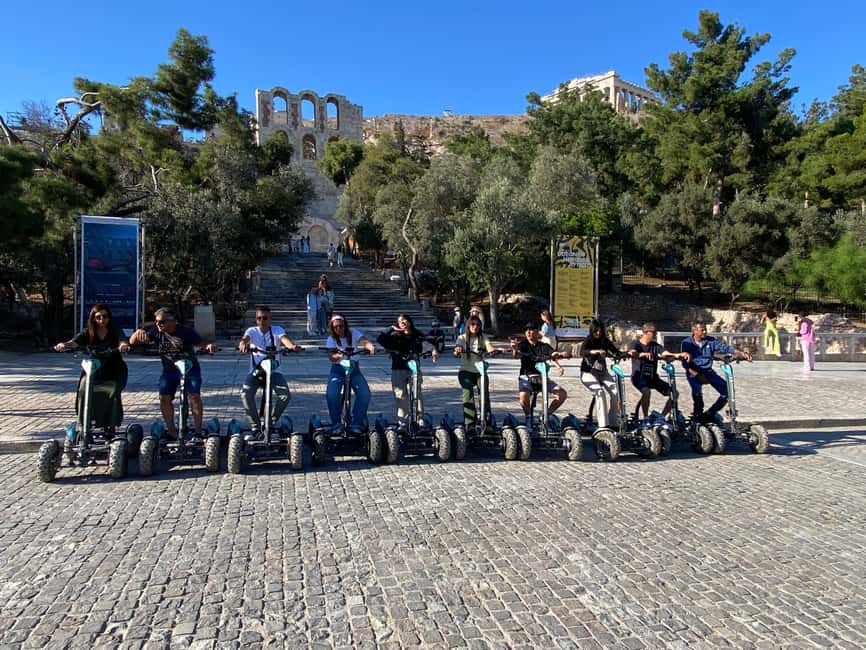
At $58 per person for 2 hours, you’re paying for convenience and access to multiple major zones with less effort than walking. And it’s not just “a scooter rental.” The included items—tour guide, Mia Four ATV scooter, helmet, insurance, training, water, and WiFi—mean the price covers both the equipment and the people-time that makes the route make sense.
Here’s where the value really shows:
- You save time moving between landmarks (instead of long foot routes).
- You get context at each stop, so it’s not just a photo sprint.
- You reduce friction: no parking stress, no taxi negotiations, and no planning the exact best back-and-forth route on your own.
You do have to accept the main limitation: it’s an overview format. If you’re the kind of traveler who wants long unbroken time inside every site, treat this as your “get oriented and see the highlights” session, then follow up with deeper self-guided exploration.
Guides, languages, and why it changes the feel
The tour runs with a live guide in English, Spanish, and Hebrew. That matters because Athens history is dense, and good guiding turns a collection of ruins into a story you can actually follow.
In the feedback tied to specific guides, Bill is mentioned as friendly, knowledgeable, and patient—sharing scenic routes and practical advice that helps you feel safe from the start. Another name you might encounter is Demi, described as pleasant and doing a thorough job of explaining the city from a French-language perspective.
That doesn’t mean every guide will match that exact style. It does mean the tour model is designed so guides can focus on both safety and story.
Who this scooter tour is best for (and who should skip it)
You’ll likely love this tour if:
- you want to see major highlights like the Acropolis and Agora area without a huge walking day
- you like photos and viewpoints, not just reading plaques
- you want a guided overview that helps you plan what to do next
You might not enjoy it as much if:
- you strongly prefer long, quiet time inside archaeological sites
- you dislike riding in traffic conditions or you’re uncomfortable managing a scooter during stops
It’s not suitable for children under 8 years, so it’s mainly aimed at older kids and adults.
Should you book this Ancient Athens Electric ATV tour?
If you’re short on time and you want Athens to feel close and understandable fast, I think this is a smart booking. The combination of electric four-wheel scooters, training, photo stops, and major landmark coverage makes it a strong “first orientation” activity, especially if you want Plaka in your start/end loop.
Skip it if you’re the type who wants to linger at fewer places for longer. In that case, you might do better with a slow museum day plus independent exploring.
If you want a guided, efficient, and fun way to connect the hills, theaters, civic spaces, and Roman layers of Athens in a single afternoon, this is a solid pick.
FAQ
How long is the Ancient Athens Electric ATV Scooter Tour?
The tour lasts 2 hours.
Where does the tour start and where do you return to?
The tour starts in the Plaka neighborhood and returns back to Plaka.
What’s included in the price?
Included are a tour guide, an ATV scooter (MIA Four), helmet, insurance, training, water, and WiFi.
Is the tour suitable for children?
It is not suitable for children under 8 years.
What languages are offered for the live guide?
The live tour guide is available in English, Spanish, and Hebrew.
Is free cancellation available?
Yes, there is free cancellation up to 24 hours in advance for a full refund.